
I went to Busan last month, and this month, I visited Paris.
For local transportation, UBER was the only choice. In Korea, taxis come through UBER, and in France, regular cars arrive.
UBER is convenient. Not having to use cash, especially when traveling, is great. Receipts are also stored online, making it easy for expense reimbursement.
In Busan, using a taxi hailed on the street often required cash or MPASS because credit cards weren’t widely accepted. MPASS is like SUICA in Japan, chargeable in Japanese yen and useful for subway and taxis. However, if you use UBER, you don’t need to bother with it.
By the way, what surprised me about taxis in Busan was that they were 100% electric vehicles (EVs). You can feel the powerful acceleration once you’re in, and the dashboard looks cool.
In Paris, more than 80% of the UBERs I took were EVs, and many of them were Toyotas.
Toyota plans to provide non-gasoline cars, including electric and hydrogen vehicles, for the Paris Olympics next year (2024). I hope they release them in Japan soon.
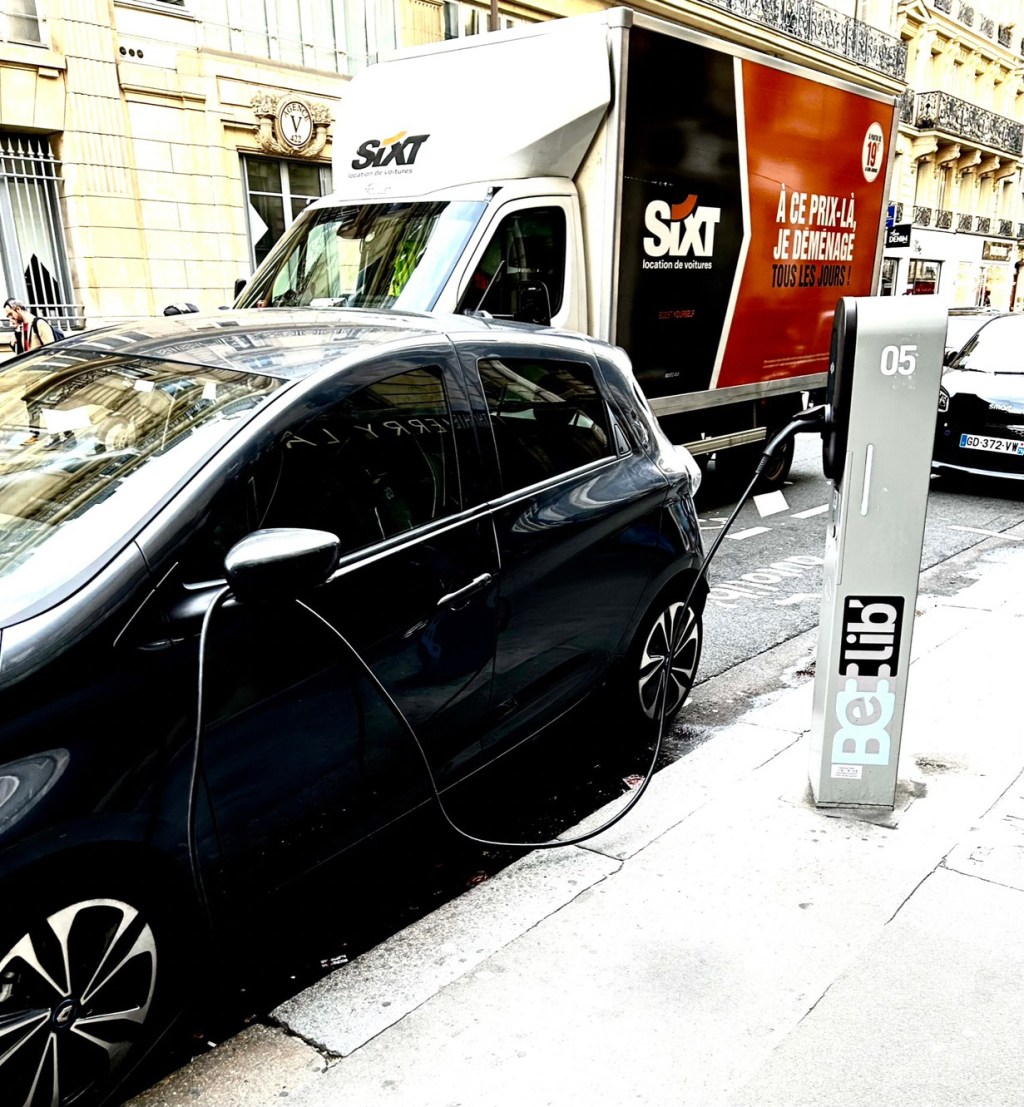
In Paris, there are charging stations on the roadside like the top photo, and cars are being charged like mobile phones. Probably, it’s the company called “Belib.” There are many socket types for electric vehicles, and the competition for standardization is ongoing. Belib supports various types like Type 2, 3, etc.
By the way, when I visited in March, there were electric bikes (similar to LOOP) buzzing around, but they were later banned. Now, there are electric bikes (rentals) that you have to pedal yourself. Personally-owned electric kick scooters are not prohibited and I saw them occasionally.
Paris seemed to have many Toyota cars.
Upon researching, in 2022, the new car registration number in France was 1,520,000. Toyota accounted for 106,480 units, with a 6.55% market share, making it the top foreign manufacturer (JETRO, new car registration number in 2022, a 7.8% decrease from the previous year in France).
As for Japan, in 2022, the new car sales number was 4,200,000, a 5.6% decrease from the previous year (Japan Automobile Manufacturers Association).
As a side note, in 2022, the electric vehicle sales number in Japan was 77,238 units, while in France, it was 203,121 units (Yomiuri Shimbun, April 7, 2023). The electric vehicle sales number in Korea (Eco-cars) was 318,401 units (JETRO, both car production and export increased in Korea in 2022).
I noticed that Japan’s number is considerably lower.

